What happens if you stop?
Understand why you run and what you can choose to do or not do about it.
I got my first job as a...

I would like to continue the thread that was started in my last post when I touched on emotionally driven reactions to a certain underground fight club. I would recommend you reading that post before you dig into this one. I now want to explore potential reasons why some people are drawn to potentially risky situations.
When I worked in a PTSD clinic at the beginning of my psychology career and sat face to face with severely traumatized ex-soldiers who had a lot of blood on their hands, I realized that it seems to be in the extreme and its worlds that you find the most accurate descriptions of human behavior. I think it's about the fact that in those worlds you find the raw truths.
In addition to the traumatic events themselves that these veterans were tormented by, it was striking how difficult it was for them to acclimatize to a peaceful and comparatively undramatic life. It was as if their bodies experienced more relaxation and security when it was constantly reminded of the threat of either killing or being killed.
It is for a similar reason that a drug addict keeps chosing drugs over support or a well-educated woman goes back to the man who abuses her every night. The difference in these examples compared to the soldier who paradoxically may long to return to the war environment, and the men who volunteers for unprotected fights via fight clubs, is the level of percieved control.
Your body feels safe with what it knows. If it is used to chaos, cold and pain, that is where it will feel at home, even though it knows that it cannot possibly be completely healthy for it. If it was actually born into an environment of chaos, cold and pain, then it will have a VERY hard time reprogramming itself to feel at home in an environment of peaceful love. It can likely experience moments of the aforementioned, but it will have a low tolerance for staying in it for longer periods. It can lead to a fleeting life on a quest, and relationships that are constant in nature can be challenging to maintain. The body simply cannot handle longer periods without some type of extreme stimulation.

It is likely this dynamic that is part of the explanation for why some men voluntarily seek out fight club organizations. I take these men as an example because several of them, interestingly enough, can be otherwise well-functioning people with the capacity for care and self-reflection. They therefore likely experience moments of peaceful love, but still choose to continually return to the environment that harms them.
It probably goes without saying that we are talking about people with a certain type of genetics, a certain view of society and probably different types of trauma in their baggage. The question is what you do with this baggage. It seems that those who seek out a fight club paradoxically find peace in the strong emotions and secretion of neurotransmitters that fights trigger in the body. For those who cannot relate to the experience of fighting, they can imagine other activities where they find a type of meditative state precisely in movement. For some individuals, the experience of this movement obviously needs to be more extreme and provoke boundaries.
It is also reasonable to assume that those who fight achieve a sense of control over their body and their history through violence. It is through the controlled chaos and pain that arises in violence that the traumatized person finds some type of temporary reparative healing and perhaps rectification. He may feel that he is allowed to become master of his destiny, unlike potentially during his childhood when there were probably early experiences of loss of control and injustice.
There are more explanatory models to be found through the more strictly biological or evolutionary psychological theories, but I do not have the opportunity to explore them in this particular text.
There are also societal explanatory models here, which are too complex to delve into in this post but which should still be mentioned. Many of the men who seek out fight clubs probably feel let down by society in various ways or that they don't fit in anywhere other than on dark streets.
One can also imagine that they experience how their version of masculinity is not accepted. A masculinity where expressions of violence in organized forms are allowed to be expressed, often in a context of honor, respect and proud love. It is often mentioned how the masculinity that is represented in violence-affirming environments is toxic. It is something that makes me curious as I personally have experience of what I would call toxic masculinity by men who have almost 100% inhibited violent impulses. Men who abuse women should be put in a category of their own as that type of violence is too embarrassing to even be mentioned in the same sense as the word masculine.
I will likely return in a later blog post with thoughts on so-called toxic masculinity - what it is and how it arises.
Last but not least, I suspect that the attraction to the underworld where danger awaits is about a search for the raw truth. One seeks an experience of life that feels and is real without any paraphrases. Everyday life with all its protective systems can feel false and pretend. Through lawless fights without protection, similar to all kinds of situations where you are left to take responsibility for your own decisions, the feeling of your existence can be experienced to the max.
It can be mimicked the feeling that can arise during play. During play, only the present exists and everything else disappears. If those who participate in the fight club events otherwise have well-functioning lives, it could be defined as a type of playtime when they enter the fight club bubble.
With these suggested explanations as background, it may make more sense as to why some men voluntarily choose to expose themselves to bare knuckles fights.
Of course, some of them are simply only interested in violence and lawlessness and may not need any advanced explanation. As is the situation in any communitites - there are group level explanations to a phenomena and thent here are outliers of excellence and outliers of idiocy.
There are other paths to a sense of control over one's destiny than being dependent on extreme stimuli such as fighting.
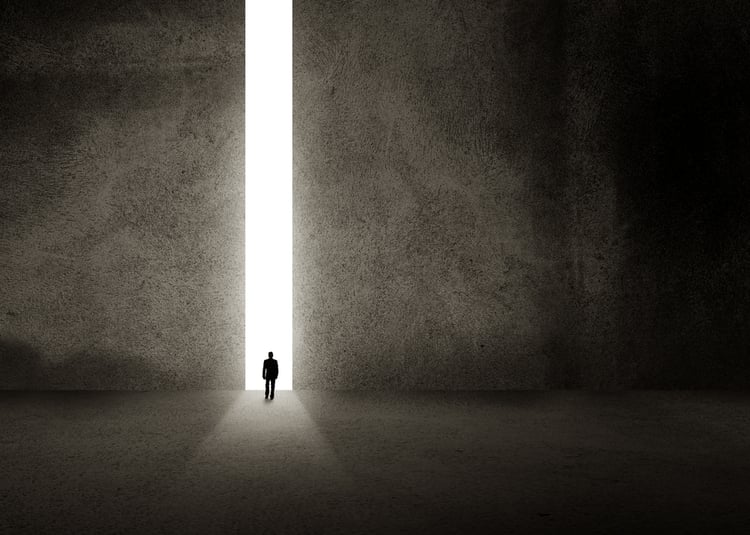
That's the one where you simply just stop. You stop running for extreme kicks. You stop searching for stimuli. You just stop. And wait for yourself. But that path requires more than you realize. It requires context, timing and motivation to face and deal with all the shit you've been running from that will come at you with full force when you stop. And why would anyone voluntarily want to do that? It's an extremely unpleasant process with no perceived control initially. But very effective if you want to stop searching, achieve inner peace and a more stable life. Which is possible you don't want.
In any case this is why I developed the online course and concept Stop before Start. Through that course you get support in facing everything you have run from your whole life so that you can then move on from it to a new kind of life. But as I have already mentioned, it requires a lot of suitable external circumstances for the motivation to stop to be stronger than the motivation to keep running.
During my 16 years as a clinical psychologist, I have continuously witnessed how challenging and demanding change from the ground up is. Generally, people are much more likely to stay in the ways of thinking, habits and lifestyles that they want to change, than to take the step into the unknown that true change entails. For that, you need to be willing to lose everything without a guarantee of what awaits you next.

I got my first job as a...
During my 16 years as...
Liv's supervision group is aimed at...